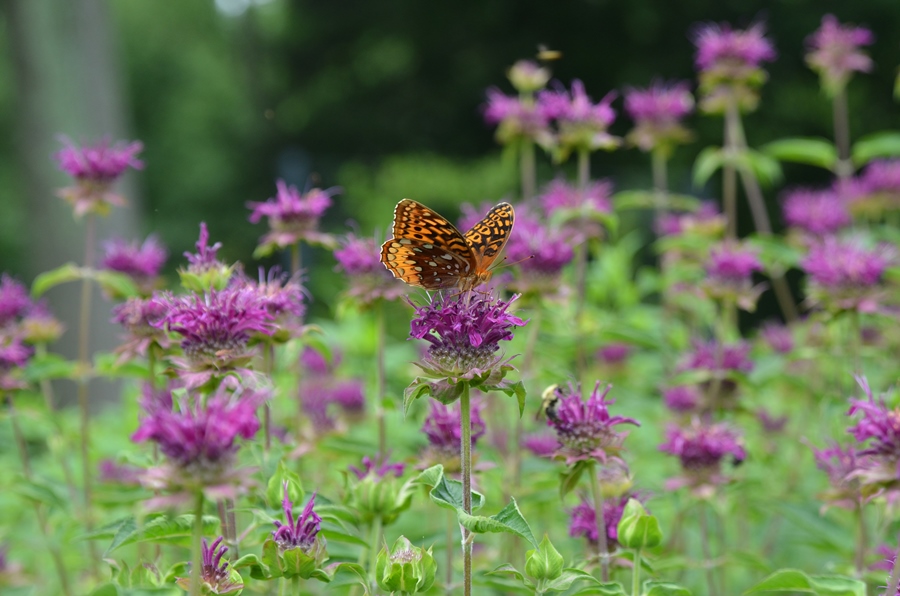
Photo Credit: Mt. Cuba Center
Planting with Monarda
Monarda (Bee Balm) is one of our favorite native perennials and a pollinator magnet. While a stand-out plant on its own, Monarda is truly happiest in company. Planted among other native perennials, shrubs, and grasses, it weaves itself into a loose, meadow-like planting, alive with movement and with a steady presence of bees and butterflies will fill your mini-meadow from spring into autumn.
The magic of a meadow
A pollinator meadow, either big or small, does more than look beautiful. It mimics the natural environment, supporting bees, butterflies, hummingbirds, and beneficial insects while creating a garden that changes through the season.
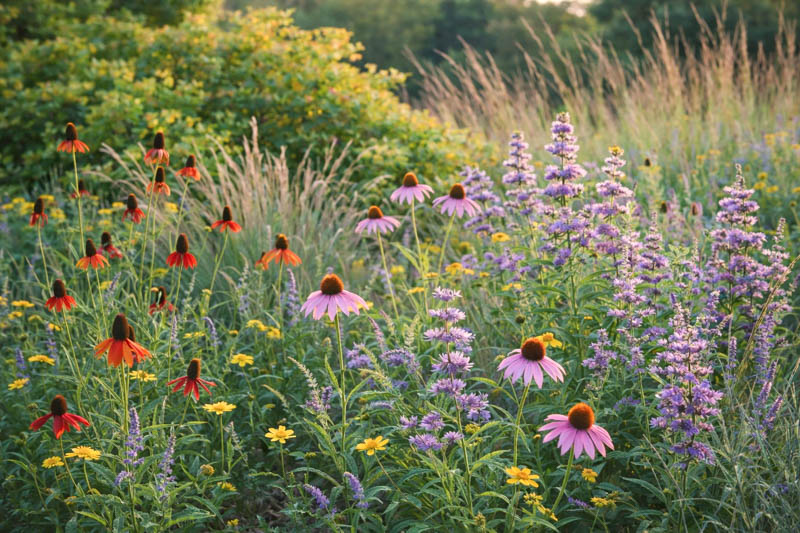
Whether you have a single sunny corner, a front-yard border, or acres to play with, the principle is the same: layer plants that bloom in sequence and grow together naturally. A meadow is easily built through varied heights, bloom times, color, and texture.
Start with Monarda as the anchor
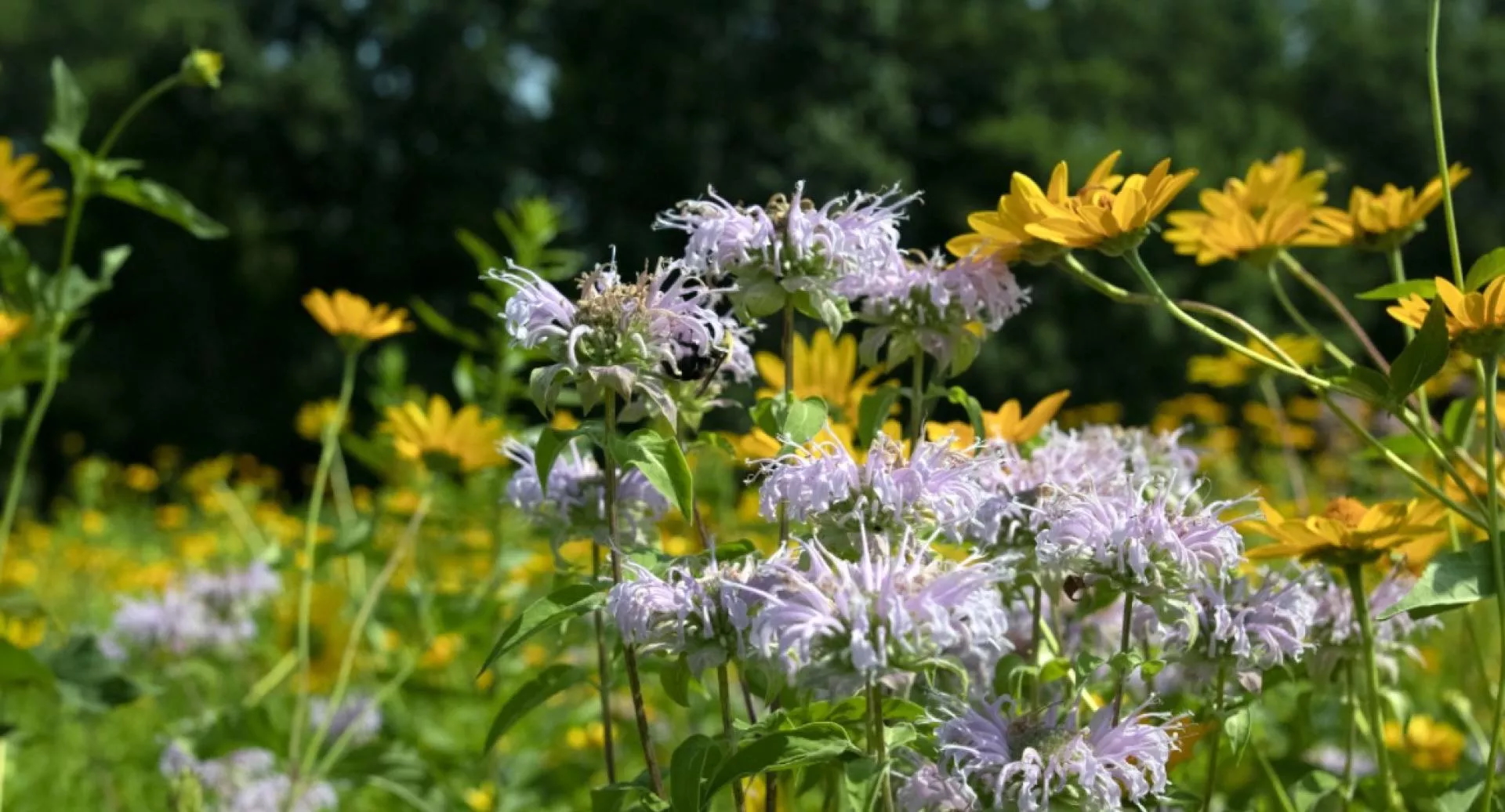
Bee Balm brings bold midsummer color, fragrant foliage, and constant pollinator activity. Monarda is one of our favorite native perennials, great as a stand-alone but it truly thrives with company.
Let Monarda take the central summer role, build around it with layers of early bloomers, other peak-season perennials, native grasses, and late-season color. Mt. Cuba Center has compiled a great guide on Monarda selections based on their trial gardens, which can be found here: https://mtcubacenter.org/trials/monarda/
Layer One: Early structure
Start with plants that give the garden presence before Monarda reaches its peak.
Baptisia (False Indigo)
Strong, shrub-like form with beautiful early-season flowers and handsome foliage and lingering seedheads after bloom. Read our ‘Wild About Baptisia’ post here.
Amsonia hubrichtii (thread-leaf bluestar)
Soft, feathery texture and pale blue spring flowers abound. Fine foliage creates beautiful movement through summer before turning a glowing golden color in fall. Use it as an airy, graceful early-season structure plant.
Amsonia tabernaemontana (Eastern bluestar)
Amsonia tabernaemontata has broader leaves, a fuller habit, and clusters of star-shaped blue flowers in spring. It offers a sturdier, more substantial presence than threadleaf Amsonia.
Layer Two: Peak summer color
These perennials bloom alongside Monarda and help create the abundant, meadow-like feeling that makes a pollinator planting feel alive.
Echinacea (Coneflower)
A classic summer perennial with strong form, long bloom, and excellent pollinator appeal.
Rudbeckia (Black-Eyed Susan)
Bold, cheerful, and reliable. Ideal for massing with Monarda and grasses.
Coreopsis (Tickseed)
Airy, bright, and easygoing, with a long bloom window in sunny gardens.
Asclepias (Butterfly Weed)
A native pollinator favorite, especially important for monarch butterflies.
Penstemon (Beardtongue)
Upright blooms, clean foliage, and excellent early pollinator value.
Layer Three: Texture and movement
A meadow without grasses can feel heavy. Native grasses soften the planting, catch the light, and give the whole garden a sense of motion.
Use grasses as the thread that ties everything together.
Schizachyrium (Little Bluestem)
Compact, colorful, and beautiful from summer through fall.
Andropogon (Big Bluestem)
Taller and more dramatic, ideal for larger meadow plantings.
Eryngium yuccifolium (Rattlesnake Master)
White, thistle-like flower are a perfect contrast to the colorful Monarda and Echinacea blooms and pair perfectly against dark-toned Penstemon foliage, while yucca-like leaves give a true prairie-like feel to mixed plantings.
Layer Four: Late-season bloom
The best pollinator gardens do not stop in July. Add late-season bloomers to keep color, nectar, and movement going into fall.
Aster (Fall Aster)
Essential late-season color and one of the most valuable plants for fall pollinators.
Solidago (Goldenrod)
Bright, generous, and deeply useful for pollinators late in the season.
Add structure with native shrubs
Shrubs give a pollinator meadow permanence. They create height, shelter, seasonal rhythm, and habitat beyond flowers alone.
Clethra alnifolia (Summersweet)
Fragrant July–August flowers. Adaptable from sun to shade and valuable for pollinators.
Itea virginica (Virginia Sweetspire)
Arching white flowers, excellent fall color, and useful in varied moisture conditions.
Viburnum nudum (Possumhaw Viburnum)
Spring flowers, berries for birds, and strong four-season garden value.
Aronia melanocarpa (Black Chokeberry)
Spring bloom, fall color, dark berries, and excellent adaptability.
Ceanothus americanus (New Jersey Tea)
A low native shrub for dry, well-drained sites with summer flowers and pollinator value.
Designing a meadow for any size space
Tiny Meadow
10–50 square feet
- Choose 3–5 plant varieties
- Repeat plants instead of buying one of everything
- Use Monarda, Echinacea, a grass, and one late bloomer
The Suburban Border
Front yard, side yard, or any sunny bed
- Layer early, peak, and late-season bloom
- Add a few grasses for softness
- Include a shrub (or two) for balance.
Large Meadow
Big beds or open spaces
- Plant in drifts and repeated groups
- Let grasses and perennials naturalize
- Include shrubs for habitat and winter structure
The Simple Formula:
- The anchor, Monarda
- 2 summer bloomers: Echinacea + Rudbeckia
- 1 grass: Little Bluestem
- 1 fall bloomer: Aster or Solidago
A different way to think about gardening
A planting like this does not peak once and disappear. It evolves. Early structure gives way to midsummer abundance, then softens into late-season flowers, seedheads, grasses, and movement. The result is a garden that is living system, natural in feel, and less like a collection of disparate elements.
Start your own pollinator meadow.
Whether you have 10 acres or 10 sq. feet, planting with Monarda is less about filling space and more about creating an easy, low-maintenance garden that can be enjoyed almost year-round.