Understanding how to prune hydrangeas can feel overwhelming, but the answer is simple…
The one rule: know where your hydrangea sets its buds
- Old wood (last year’s stems): bigleaf, mountain, oakleaf, and climbing hydrangeas. Buds form in late summer and fall and wait on the stems all winter. Prune right after they bloom.
- New wood (this year’s growth): smooth and panicle hydrangeas. Buds form in spring, so late-winter pruning is safe.
- Rebloomers (some bigleaf and mountain cultivars, such as Endless Summer®): they bloom on both, so they are more forgiving. A heavy cut still costs flowers.
Most importantly, you don’t have to prune every year. Often the best plan is to remove dead stems, make a few thoughtful cuts, and let the shrub grow. If you don’t know what you have, remove only clearly dead wood until you’ve seen it bloom.
Quick reference
| Type | Blooms on | Prune when | How much |
|---|---|---|---|
| Bigleaf (Hydrangea macrophylla) | Old wood (rebloomers: both) | Right after flowering, by early August | Light shaping; thin a few of the oldest stems |
| Mountain (H. serrata) | Old wood | Right after flowering, by early August | Minimal |
| Oakleaf (H. quercifolia) | Old wood | Right after flowering, by early August | Minimal; keep the peeling bark |
| Climbing (H. anomala subsp. petiolaris) | Old wood | After flowering, only if needed | Only for clearance and containment |
| Smooth (H. arborescens) | New wood | Late winter to early spring | Cut around 6–12 inches for a tidy shrub, or lighter for a taller one |
| Panicle (H. paniculata) | New wood | Late winter to early spring | Shorten by up to about one-third; thin crossing stems |
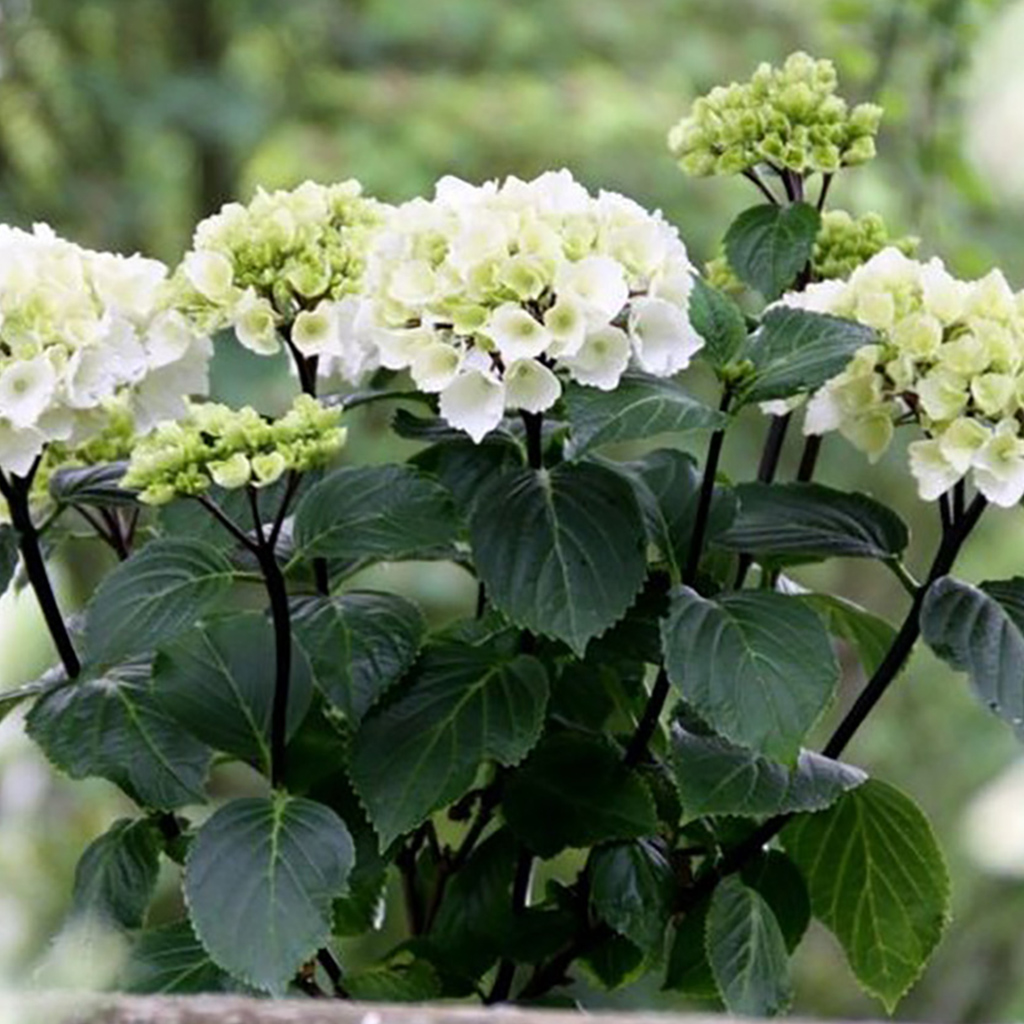
Hydrangea macrophylla
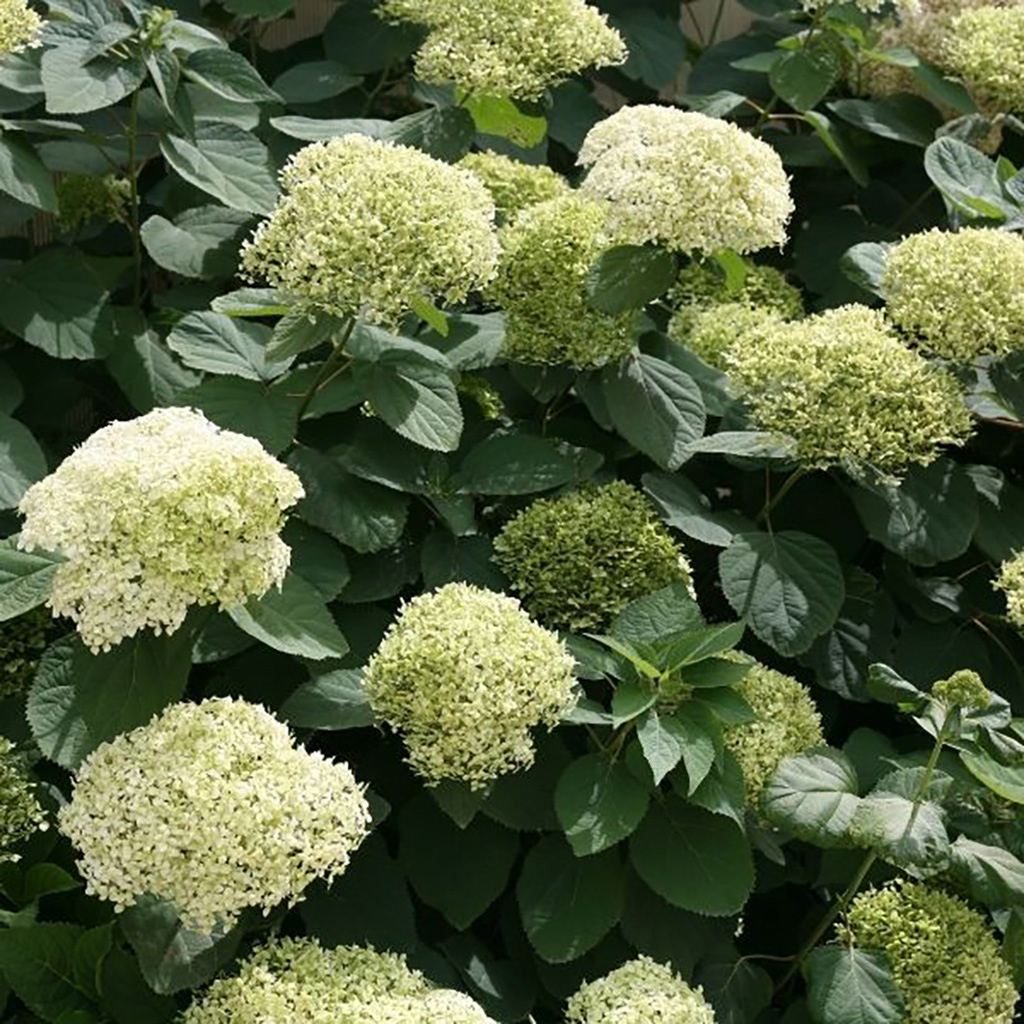
Hydrangea arborescens
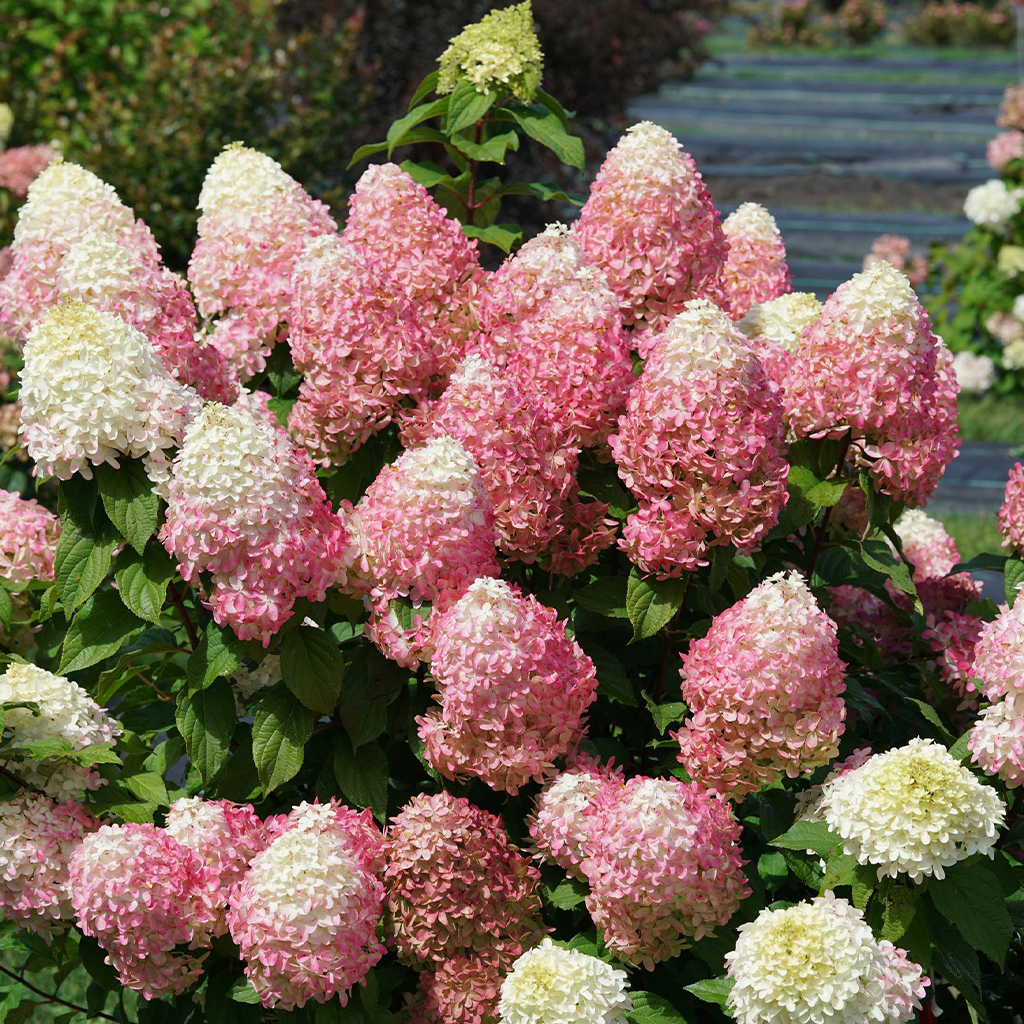
Hydrangea paniculata
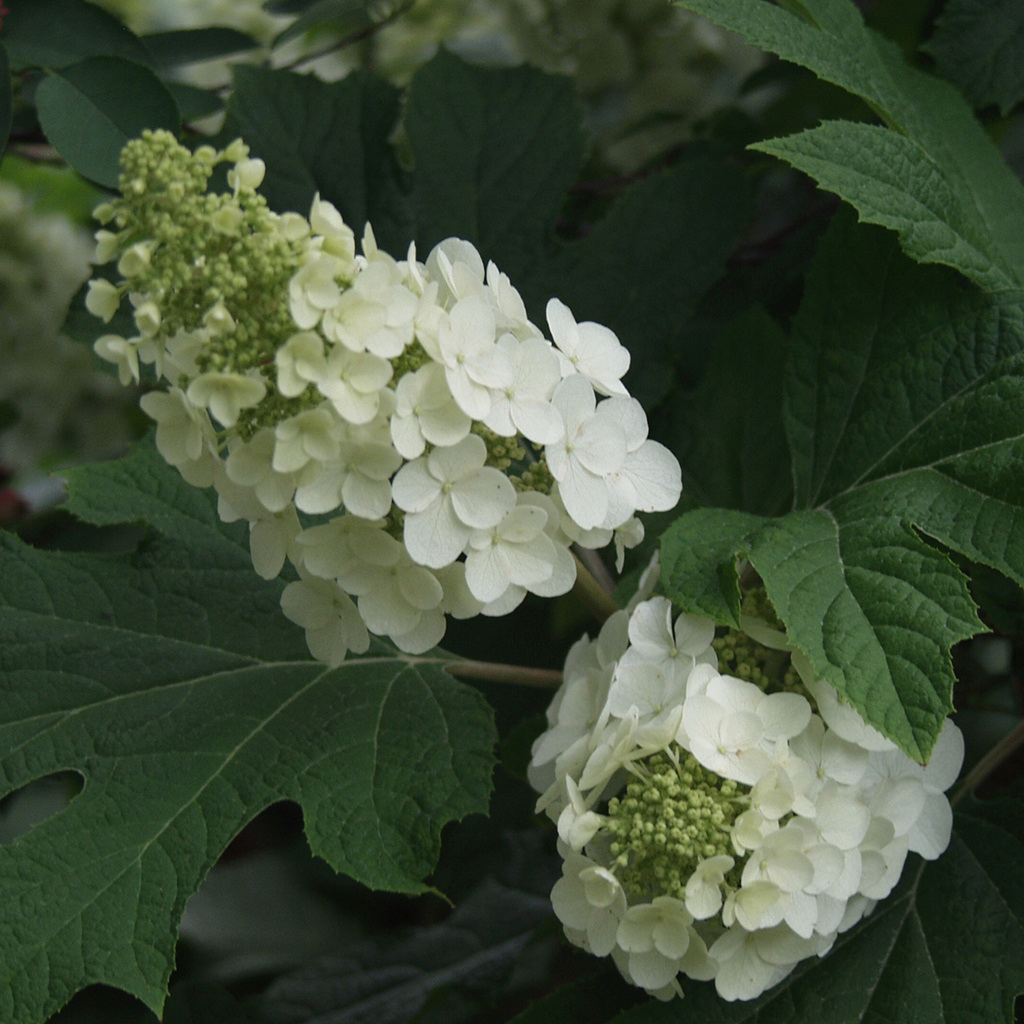
Hydrangea quercifolia
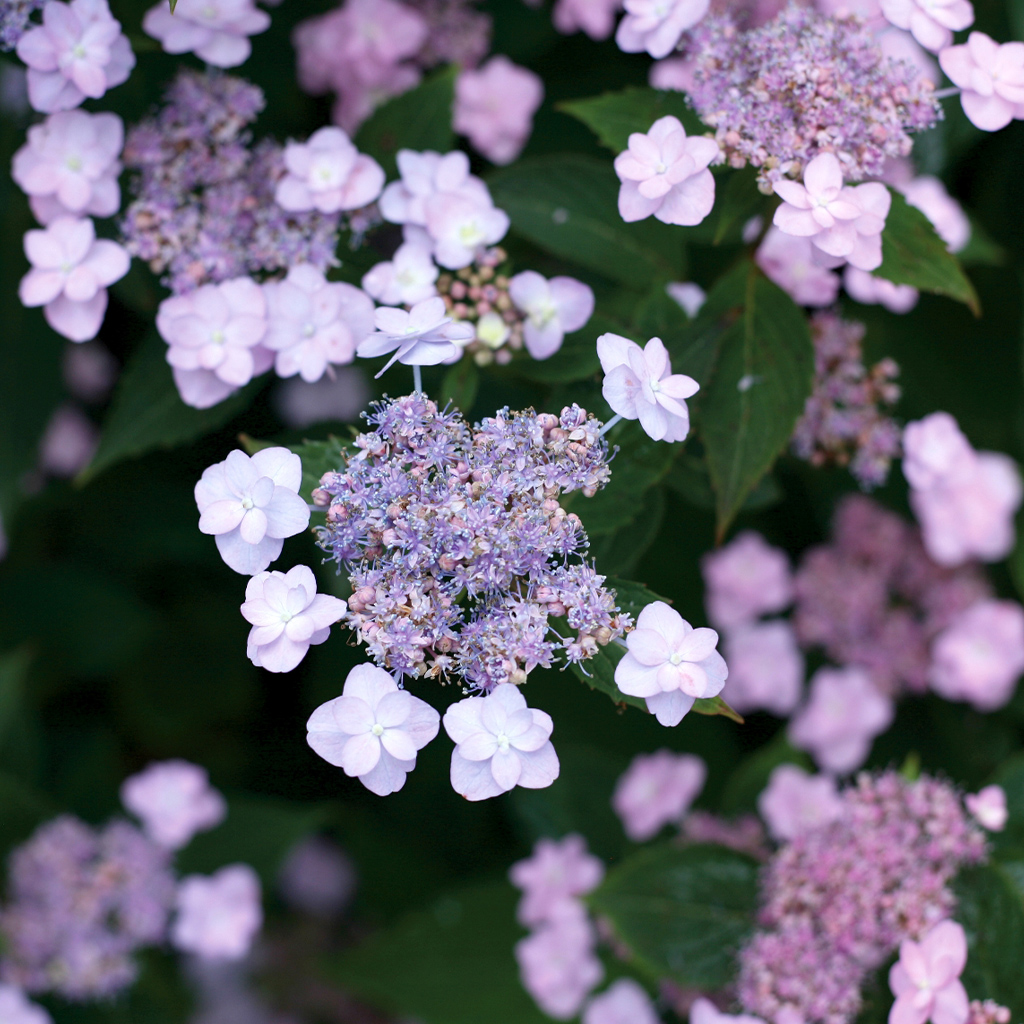
Hydrangea serrata
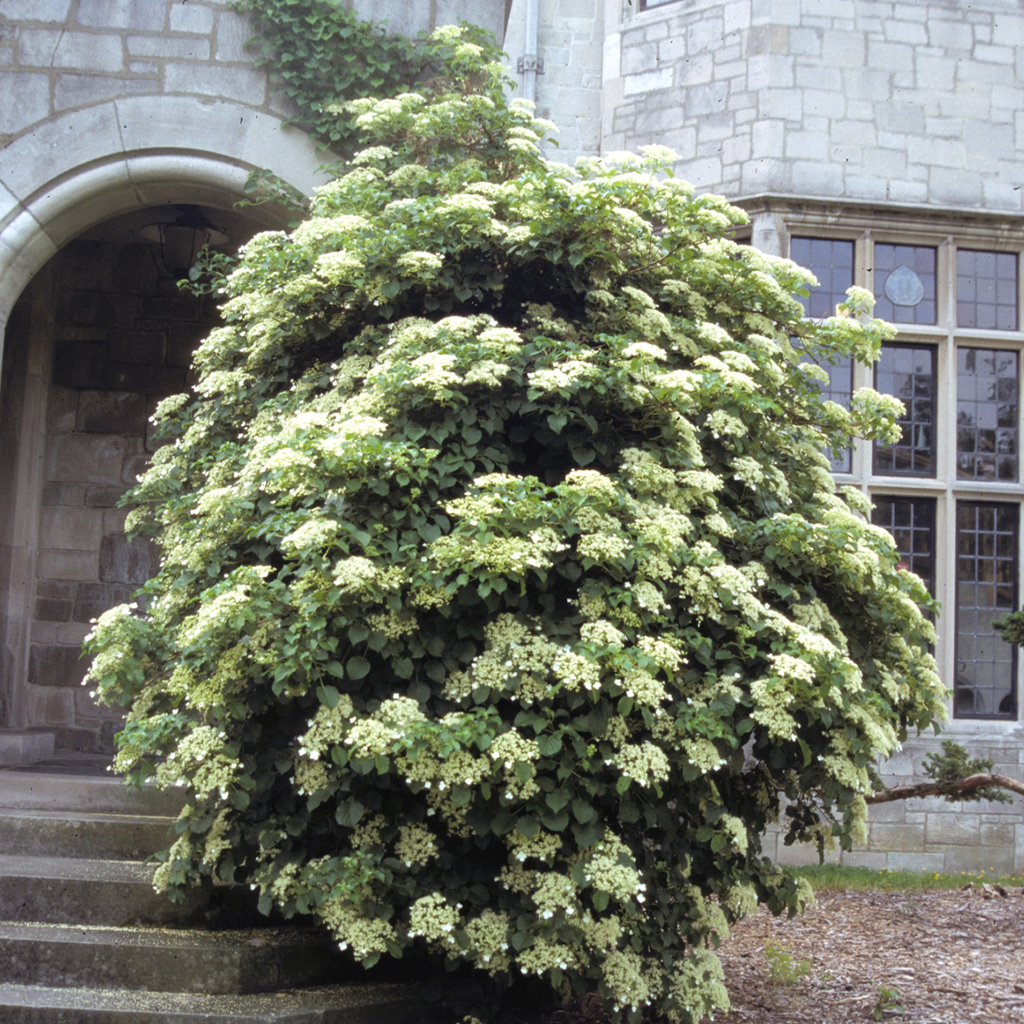
Hydrangea anomala subsp. petiolaris
What to watch for in our area
Most of Delaware and Southeast Pennsylvania sit in USDA zones 7a–7b, with a few warmer pockets, so winter cold is rarely extreme but can still damage buds.
- Bigleaf: wait for leaf-out before removing dead wood. Brown stems are not always dead, so scratch the bark. Green underneath means alive. In northern Delaware, leaf-out usually comes in late April to May. Cold can kill the buds while the stems survive, which is why a bigleaf can leaf out and still not bloom.
- Smooth (‘Annabelle’): heavier cuts make bigger, heavier heads that flop after rain. Prune lighter, add support, or try a sturdier cultivar such as ‘Incrediball’.
- Panicle: the most dependable bloomers here. ‘Limelight’, ‘Little Lime’, ‘Quick Fire’, and ‘Bobo’ all bloom on new wood. Tree-form panicles keep their trunk, so never cut one to the ground. The old “PeeGee” name belongs to the cultivar ‘Grandiflora’.
- Oakleaf: needs less pruning than you think. Heavy cuts cost flowers and the winter bark.
- Climbing: prune only for clearance around windows, gutters, and doors, and only after flowering.
Your pruning calendar
| When | What to do |
|---|---|
| Late winter (February–March) | Prune panicle and smooth hydrangeas before new growth starts. |
| Spring, once leaves emerge | Check old-wood types for winter damage. Remove only stems that are clearly dead. |
| After flowering, by early August | Shape bigleaf, mountain, oakleaf, and climbing hydrangeas if needed. |
| Fall and winter | No major pruning. |
What you can do right now in October/November
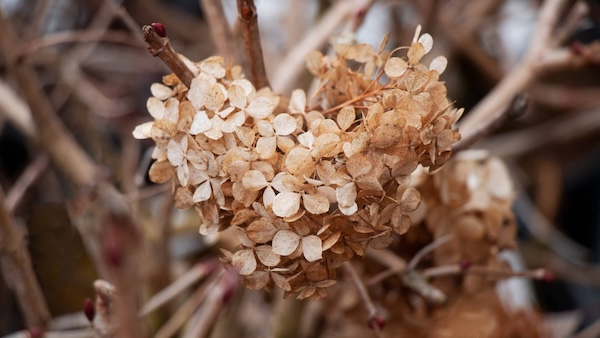
Put the loppers away for the season. Faded blooms can stay on: they add winter interest and help protect the buds on bigleaf hydrangeas. If you want to tidy up, remove spent flower heads and clearly broken stems, and don’t cut deep into the stem. Save panicle and smooth hydrangeas for late winter.
Quick answers
Not sure what you have? Bring a photo in to Gateway and we’ll help you identify it, or if your hydrangea was purchased with us we can look up your customer history.
Can I cut my hydrangea to the ground? Smooth hydrangeas, usually yes. Panicles tolerate it, but it is rarely the best choice. Bigleaf, mountain, oakleaf, and climbing hydrangeas, no. You would lose a season of flowers.
Why does my hydrangea have leaves but no flowers? The usual causes are winter bud damage, pruning at the wrong time, too much shade, too much nitrogen fertilizer, or deer browsing.
Should I prune every year? No. Prune for a reason, such as structure, size, or renewal. When renewing an older shrub, remove a few of the oldest stems at ground level over several seasons rather than all at once.