Treasure Hunting at Octoraro Farm: Rare Natives, Spring Ephemerals, and the Story Behind a One-of-a-Kind Nursery
Printable Plant List
We visit a lot of nurseries every spring to catch up with old friends and make new ones, look over endlessly neat greenhouses filled with endlessly neat rows of plants. These visits are always lovely but rarely do we come away as inspired and with a sense of passion and purpose as our recent visit to Octoraro Farm. This was a pilgrimage to meet our friend and obsessive plantsman-guru Harold Sweetman and his hyper-curated selection of amazingly rare and unusual native plants. We loaded our van absolutely chock-full of great selections and we’re so excited to share this collection with you.
From Stockyard to Native Plant Nursery
If you’ve never heard of Octoraro Farm, you’re in good company. It’s a small, quiet operation tucked into the rolling countryside along the Octoraro Creek near Nottingham, PA.
Back in the ’60s, the farm was a working cattle operation, home to roughly 250 head of Black Angus from the Strawbridge Estate Angus herd, while the rest of the property served as an upland bird hunting ground by the Strawbridge Family. In 1988, Harold and his wife Christine purchased the property and began the long process of converting the land to the one-of-a-kind plant nursery it is today.
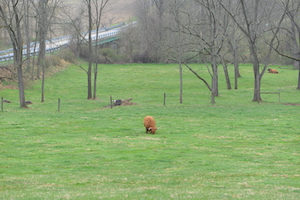
Pulling into the property, from the road it still looks like (and is) a working farm. One last remaining silo gleams in the sun adjacent to the skeletons of the old pole barns, now packed with plants. A few Scottish Highland cattle wander the front fields, now kept as pets rather than livestock. The view from the farm stretches across the pasture to Octoraro Creek, over Harold’s blueberry patches, and out to the Goat Hill Serpentine Barrens in the distance.
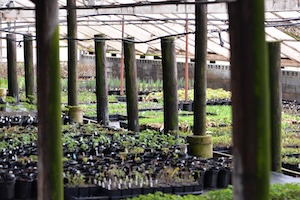
Once filled with cattle, the four 100 foot long are now home to tens of thousands of plants, aisles barely narrow enough to walk down. A former silage area has been dug out and transformed into a walapini-style propagation greenhouse. Most of the plants Harold has propagated himself… spring ephemerals, ferns, native wildflowers, deciduous azaleas, rhododendrons, and so much more.
The People Behind The Plants
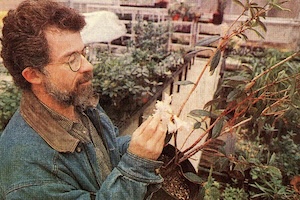
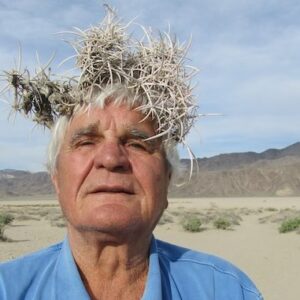
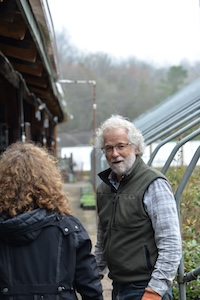
For 33 years Harold served as the executive director of the Jenkins Arboretum & Gardens before retiring in 2019. He had taken over that role from his father in 1986, and had been the only full-time staff/gardener until 1999.
Since his retirement, Harold has poured himself fully into the farm, focusing growing rare and unusual species… spring ephemerals, native woodland plants, wildflowers, ferns, deciduous azaleas, rhododendrons, and blueberries. He somehow still finds time for his creative passions too — silversmithing, jewelry making, and woodworking among them… in addition to his gardening tool museum.
Most of what Harold grows is genuinely hard to find, with the majority of his plants finding their way to the premiere private and public gardens and arboretums in the region.
The Octoraro Collection
What we love most about partnering with growers like Harold is the ability to share share something truly special with our customers. We’re thrilled to share both Harold’s and our own inspiration and passion, and the incredible selection of rare, native, and hard to find plants with you!
Quantities on many of these plants are small — sometimes just one or two of a kind.
Printable Plant List
Spring ephemerals
- Mertensia virginica (Virginia Bluebells) — those impossible sky-blue bells that carpet floodplain woodlands in April. We have these in both 1 QT and a generous 1G size. Plant them and forget them; they’ll go dormant by summer and come back stronger every year.
- Dodecatheon meadia (Shooting Star) — purple, nodding flowers shaped exactly like their common name suggests. A spring ephemeral charmer.
- Podophyllum peltatum (Mayapple) — the umbrella-leaved colonizer of woodland floors, with a hidden white flower beneath the leaves. The fruit is beloved by our native Box Turtles, and supposedly tastes like a mix of pineapple, lemon, passionfruit, and banana.
- Caulophyllum thalictroides (Blue Cohosh) — a connoisseur’s plant. Smoky blue-purple new growth in spring, followed by deep blue berries.
- Asarum canadense (Canadian Wild Ginger) — heart-shaped, low-growing groundcover for shade with strange little maroon flowers hidden at soil level.
Woodland Wildflowers & Shade Plants
- Phlox divaricata ‘May Breeze’ (Woodland Phlox) — pale, ethereal, almost-white blue. Fragrant.
- Tiarella cordifolia ‘Running Tapestry’ (Foamflower) — frothy white spring bloom spikes over beautiful patterned leaves.
- Iris cristata ‘Powder Blue Giant’ and ‘Tennessee White’ (Dwarf Crested Iris) — two named selections of the native woodland iris, perfect for the front of a shaded bed.
- Viola walteri ‘Silver Gem’ (Appalachian Blue Violet) — purple flowers above silver-marked foliage. A true gem of a perennial!
- Erigeron pulchellus ‘Lynnhaven Carpet’ (Robin’s Plantain) — a low, mat-forming native with white-and-lilac daisy flowers.
- Pachysandra procumbens (Native Pachysandra) — the eastern native cousin of the ubiquitous Japanese pachysandra, with much more character.
- Polystichum acrostichoides (Christmas Fern) — evergreen, native, indestructible.
- Carex woodii (Pretty Sedge / Wood Sedge) — a refined native sedge for dry shade.
Sun-Loving Natives for Pollinators
- Asclepias incarnata ‘Pink Shades’ (Swamp Milkweed) — Monarch host plant, beautiful in flower, happy in average to wet garden soil.
- Echinacea pallida (Pale Purple Coneflower) — the elegant, drooping-petaled species coneflower, far more graceful than the cultivars.
- Pycnanthemum muticum and Pycnanthemum virginianum (Mountain Mints) — pollinator powerhouse! Bees, butterflies, and everything under the sun visits these.
- Solidago rugosa ‘Fireworks’ and Solidago sphacelata ‘Golden Fleece’ — two of the best-behaved native goldenrods for the garden.
- Aster ‘Snow Flurry’ (White Heath Aster) — clouds of tiny white asters in fall.
- Marshallia grandiflora (Barbara’s Buttons) — a charming and uncommon native with light pink, button-like flowers.
- Silene caroliniana ‘Short & Sweet’ (Catchfly) — bright pink spring flowers on a tidy mound.
- Sedum ternatum ‘Larinem Park’ (Woodland Stonecrop) — the only native eastern Sedum, perfect for rock gardens or as a shade groundcover.
- Penstemon hirsutus — a hairy-leaved, lavender-flowered native penstemon.
Specialty Shrubs
Harold’s collection of species azaleas, rhododendrons, and unusual native shrubs is exceptional.
- Rhododendron viscosum ‘Summer Eyelet’ (Swamp Azalea) — fragrant, late-blooming white azalea. A native treasure.
- Rhododendron x ‘Rukizon Witches Broom’ (AKA Kazan) — a tight, dwarf, witches’ broom selection.
- Pieris japonica ‘Bonzai’ — a miniature Japanese andromeda perfect for trough gardens or tight spaces.
- Pieris phillyreifolia (Climbing Fetterbush) — a fascinating southeastern native that actually climbs trees in the wild. Rarely offered anywhere.
- Sarcococca orientalis (Sweet Box) — winter-fragrant evergreen for shade.
- Xanthorhiza simplicissima (Yellow Root) — a low, suckering native shrub with great fall color.
Native Trees & Climbers
- Betula lenta (Sweet Birch) — wintergreen-scented bark, beautiful native birch.
- Carpinus caroliniana ‘Wisconsin Red’ (red-leaved selection of American Hornbeam) — gorgeous muscle-trunked native understory tree.
- Magnolia macrophylla (Bigleaf Magnolia) — one of the most dramatic native trees in eastern North America, with leaves up to 30 inches long and the largest blooms of any North American native.
- Magnolia virginiana (Sweet Bay Magnolia) and the selection ‘Green Shadow’ — semi-evergreen, fragrant native magnolia.
- Liquidambar styraciflua ‘Slender Silhouette’ (Fastigiate Sweetgum) — an astonishingly narrow native tree for tight spaces.
- Taxodium distichum (Bald Cypress) — both the species and the columnar selection Lindsey’s ‘Skyward’.
- Ilex opaca ‘Jersey Knight’ (American Holly, male pollinator) — the male needed to pollinate your female hollies.
- Celastrus scandens (American Bittersweet) — the native bittersweet, not the invasive Asian one. Beautiful orange-and-red fall berries.
- Wisteria frutescens ‘Amethyst Falls’ (Native American Wisteria) — all the beauty of wisteria, none of the invasiveness. Deep purple, fragrant, well-behaved.
See you in the garden,
The Gateway Garden Center Team